The research picks the palette, not taste
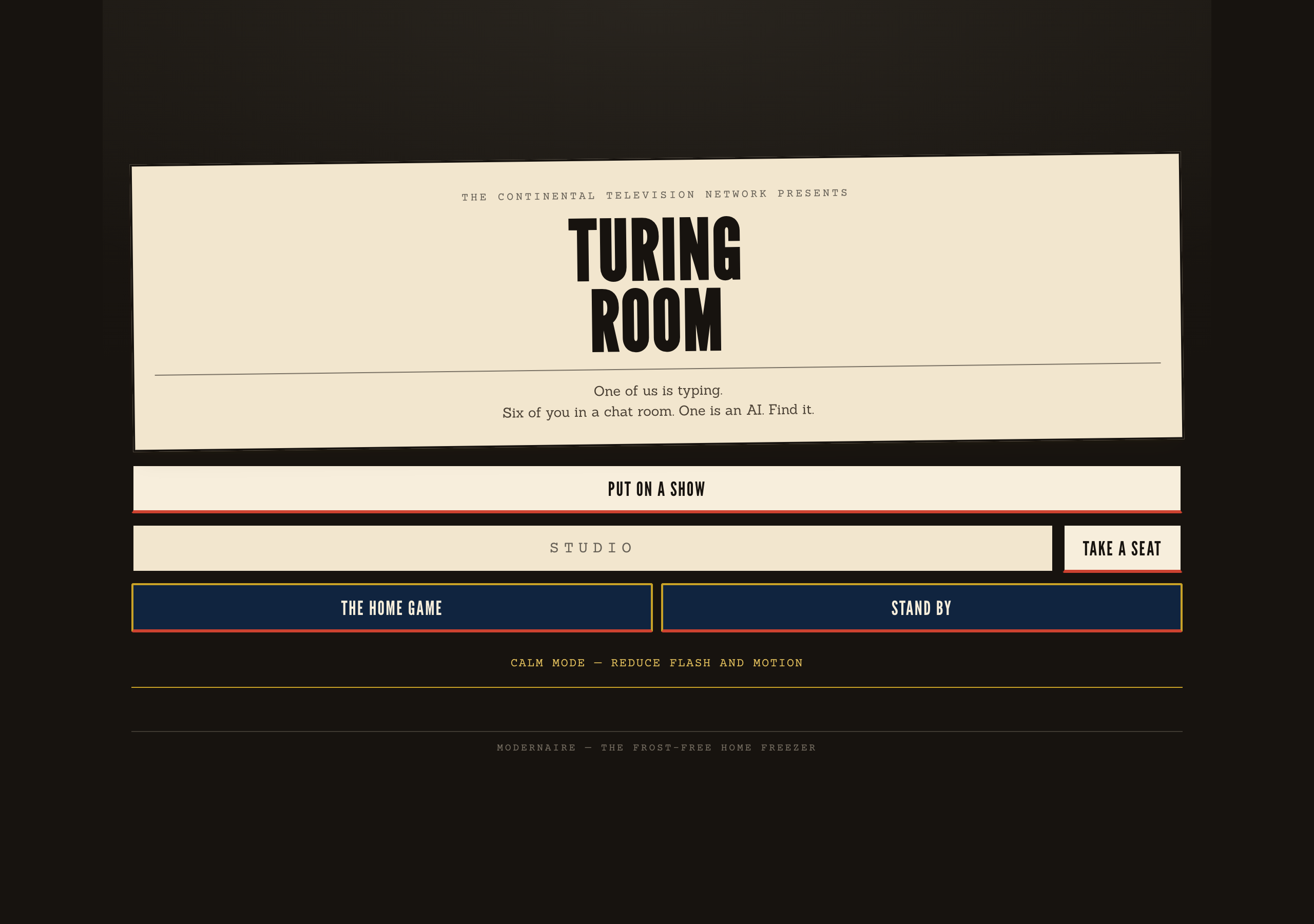
Every colour traces to a documented source: the one attested Goodson-Todman house accent (blue and gold, by their designer Ted Cooper), the Rosco broadcast reflectance standard, and the cream card stock the production department actually printed on. Pure white is the single biggest anachronism available — and it was corrected on air in 1950 for exactly that reason.
Nothing flashes, and a build gate enforces it
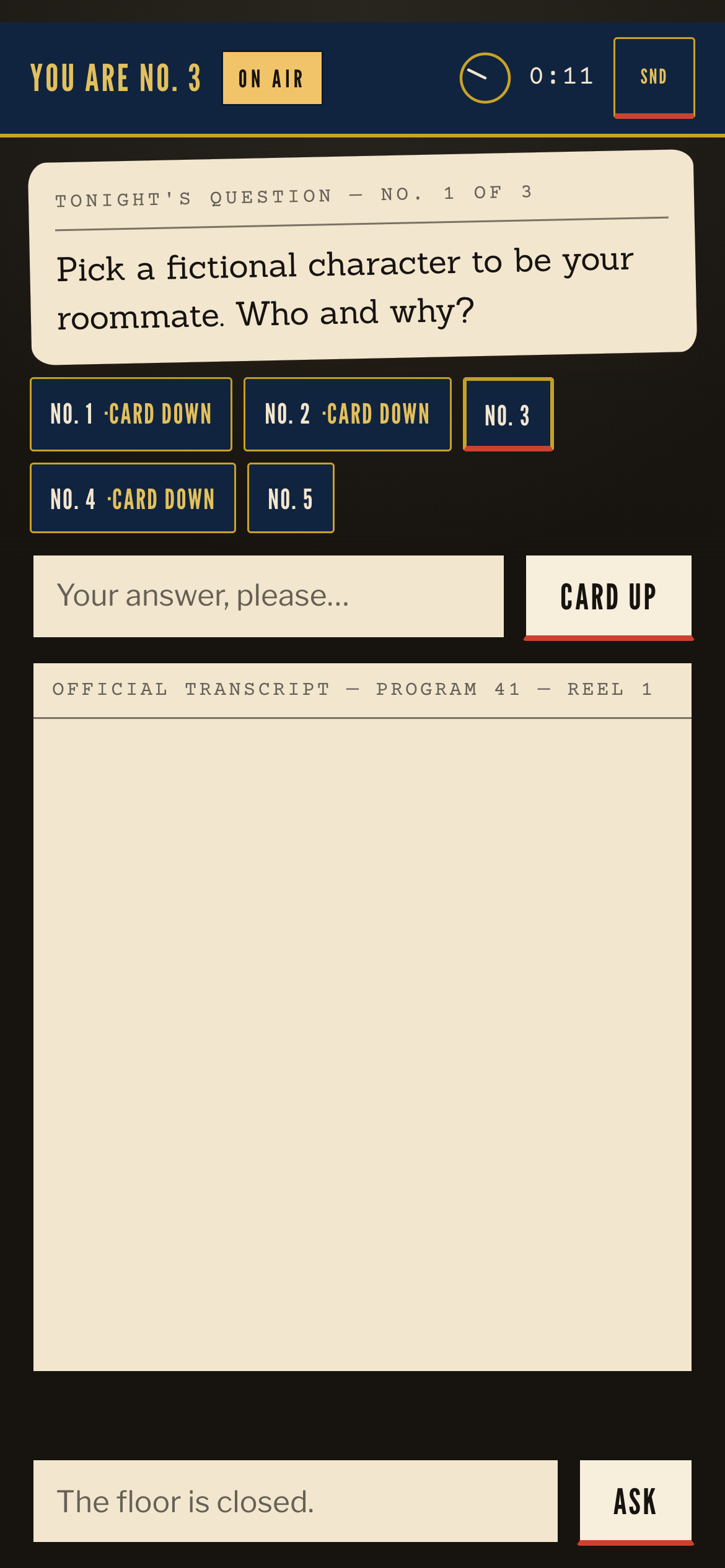
A blinking APPLAUSE sign is the thing everyone remembers — and the surviving 1950s unit has no flasher hardware in it. It is also the most dangerous animation a screen can carry. The sign lights once and holds; card cascades run at 1.4 Hz against a 3 Hz legal limit; and a lint fails the build on any repeating animation, targeting the mechanism rather than a colour name.
The AI is never called the AI
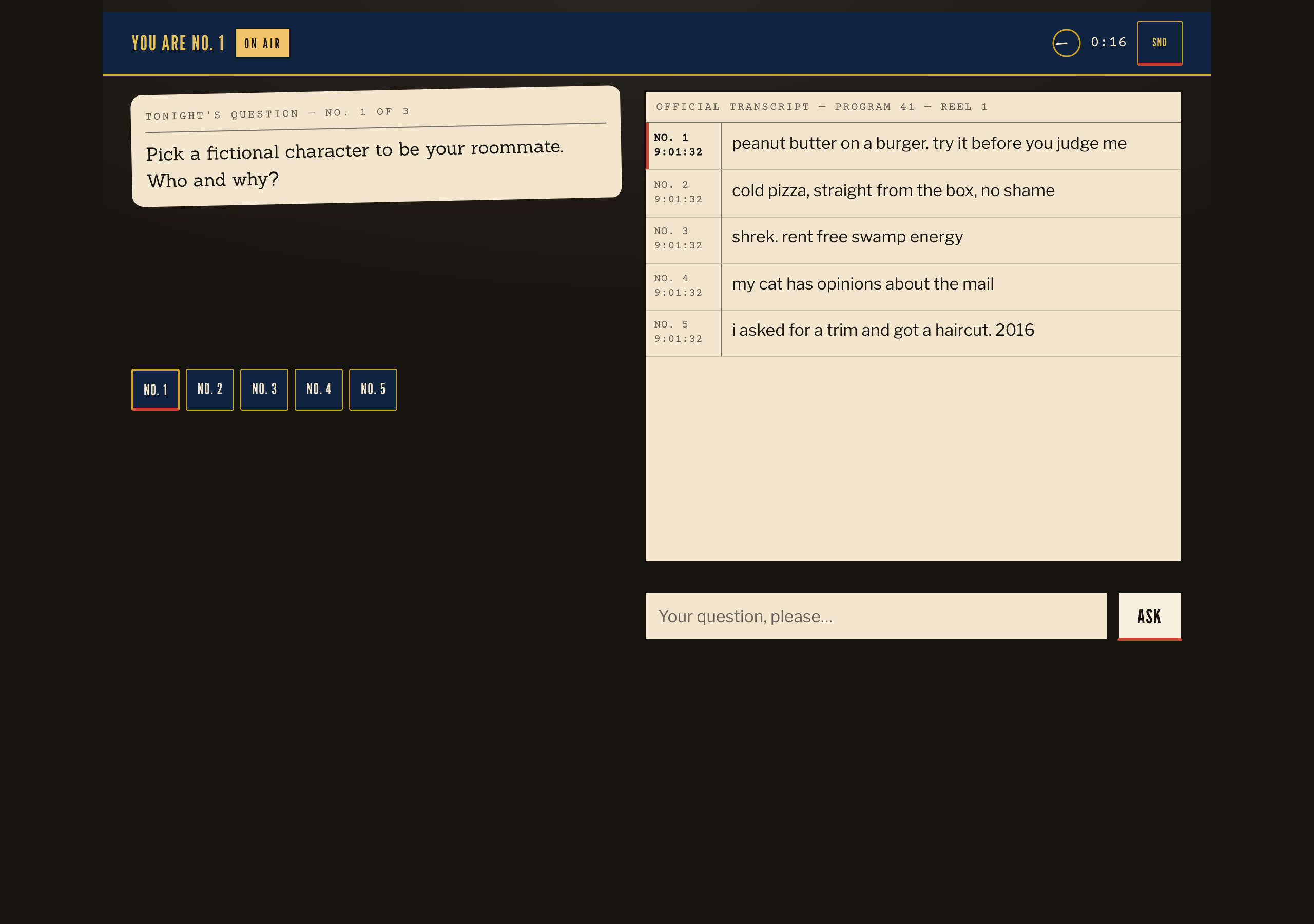
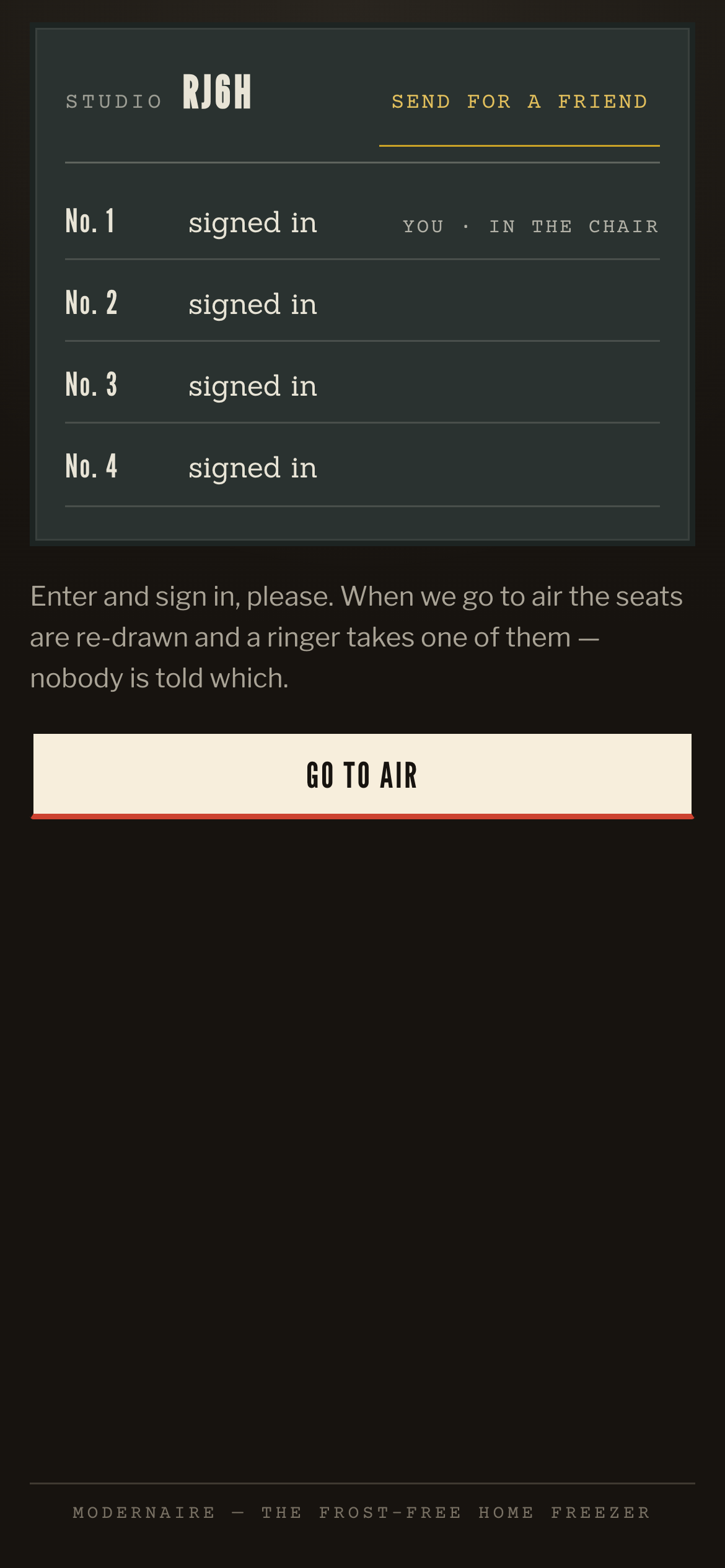
In the fiction it is the ringer, the panel is the panel, and the room code is a studio number. The word that breaks the world never appears in the interface.
The bot’s tells are statistical, not scripted
Response timing is drawn from log-normal distributions with one typing speed rolled per game — because uniform delay is the single most reliable machine signature in the detection literature, and a bot that re-rolls its speed per message is a tell of a different kind.
Rooms are Cloudflare Durable Objects — one object per studio, holding the whole game in memory and driving its phases off a single alarm. The client is hand-written HTML, CSS and JavaScript with no build step, and every sound in the product is synthesised at runtime through one master bus that sums to mono and band-limits to roughly 180 Hz–6.5 kHz — a 1961 television speaker. There are no audio files.
The hidden player runs on Claude Haiku with a behavioural signature rolled fresh each game, so regulars can never learn its habits. Its difficulty tunes itself: every finished game updates a Beta posterior per persona, and the next game is drawn by Thompson sampling toward a target catch-rate — the game teaching itself how hard to be, from how often tables actually catch it.
Bring four people. Find out how long it takes.
turingroom.com →